

Is There a Difference Between Yoga and Yoga Therapy?
Yoga is an ancient practice of harmonising the body with the mind and breath using physical poses, breathing exercises and meditation. At its most practical level, Yoga is a process of learning about oneself. Ultimately, it can lead to self-discovery, self-mastery, and self-realisation. Sounds therapeutic, right? Yoga Therapy is a process of empowering individuals to progress toward improved health and well-being through the application of the teachings and practices of Yoga. That certainly sounds like Yoga.
So, isn’t that all Yoga therapeutic? If not, is there a difference between what we all know as Yoga and Yoga Therapy?
There are distinctions, and two organisations, the Yoga Alliance and the International Association of Yoga Therapists, trying to define them for us.
The Yoga Alliance (YA) and the International Association of Yoga Therapists (IAYT) are two separate non-profit membership trade and professional organisations for Yoga teachers and Yoga Therapists, respectively. There, voluntary registries recognise teachers and schools who’ve received a certain standard of Yoga and Yoga Therapy teacher training.
Twenty years ago, the YA created standards for Yoga teachers that required each Registered Yoga Teacher (RYT) to have a minimum of 200 hours of Teacher Training. Recently, after years of developing their own training standards for Yoga Therapists, the IAYT has begun certifying Yoga Therapists, requiring a minimum of 1,000 hours of training to become certified. So, there’s a big difference in the amount of training each organisation requires for certification.
Skill Sets or Where the Mat Meets the Floor
One area where the difference between Yoga and Yoga Therapy can be appreciated is in the actual class setting. Most Yoga teachers thoughtfully prepare multiple sequences for an entire class. Each student coming to class does the same poses and breathing practices all together, like one big happy Yoga family. Because each class has some variety in the level and experience of the students, Yoga teachers offer as many modifications as possible while keeping within the pace of the class. Often, Yoga teachers manage the music and lighting for the room and help direct bodies and props like a good traffic cop. It’s a real feat of coordination to create a seamless experience for the students.
The Yoga Therapist, however, gears the practice to the individual and guides them within the framework of what each student wants and needs. So rather than the Yoga student fitting themselves into the same poses and sequences as everyone else in the same class, a Yoga therapy student does a practice that is customised for them.
What Makes Something Therapeutic?
Yoga and Yoga Therapy do seem and sound similar. All Yoga is therapeutic to some degree. But not every teacher, class, or practice would be considered Yoga Therapy. The main difference between the two is that a Yoga Therapist applies the techniques of Yoga with knowledge about a specific problem, experience, and intuition to help alleviate that problem (whether it’s physical, mental,/or spiritual). Among the many challenges and situations that Yoga Therapists often face is working with people who are managing conditions like cancer (as well as the side effects of cancer treatment), rheumatoid arthritis, depression, PTSD, diabetes, osteoporosis, recovery from injury or surgery and chronic pain.
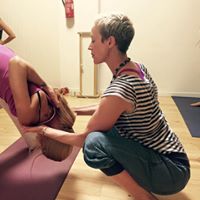
Not Every Pose Is for Everybody
Yoga has become so popular because it really is a great thing, which is why everyone should at least give it a go. Yoga Therapy is a part of the broader, deeper path of Yoga and especially suitable for anyone with aches and ailments as well as ongoing health challenges. My own path has been an eclectic one. Having turned 55 years old this year, I have been a Professional Gymnast, Air Hostess, Hairdresser, and Interior Paint Specialist, all before I was 27 years old. Since that time, many moons ago, I have achieved more than I could ever imagine, having qualified as a Teacher of Yoga, Yoga Therapist, Yoga Sports Coach, Tantra Flow Yoga™ with Jeanne Heileman and studied many, many hours along the way with renowned world-renowned teachers and became a mother, and my journey doesn’t end here.
And yes, I have my own aches and pains which I’m constantly having to adapt and adjust around within my own practice, old injuries do come back to haunt us sadly, and our bodies go through cycles of change much more quickly after the age of 50, well, it certainly has done for me. However, each experience ‘good’ and ‘bad’ personally allows me to grow as a Therapist, so really it’s all good, however bad it feels at the time…

“As we reach a certain age, it’s smart to be concerned and aware of our life condition. But if you’re thinking that Yoga is not for you because you might hurt your back, knees or shoulders, think again. It may just mean that Yoga Therapy is in your future,” – Esther Jones